
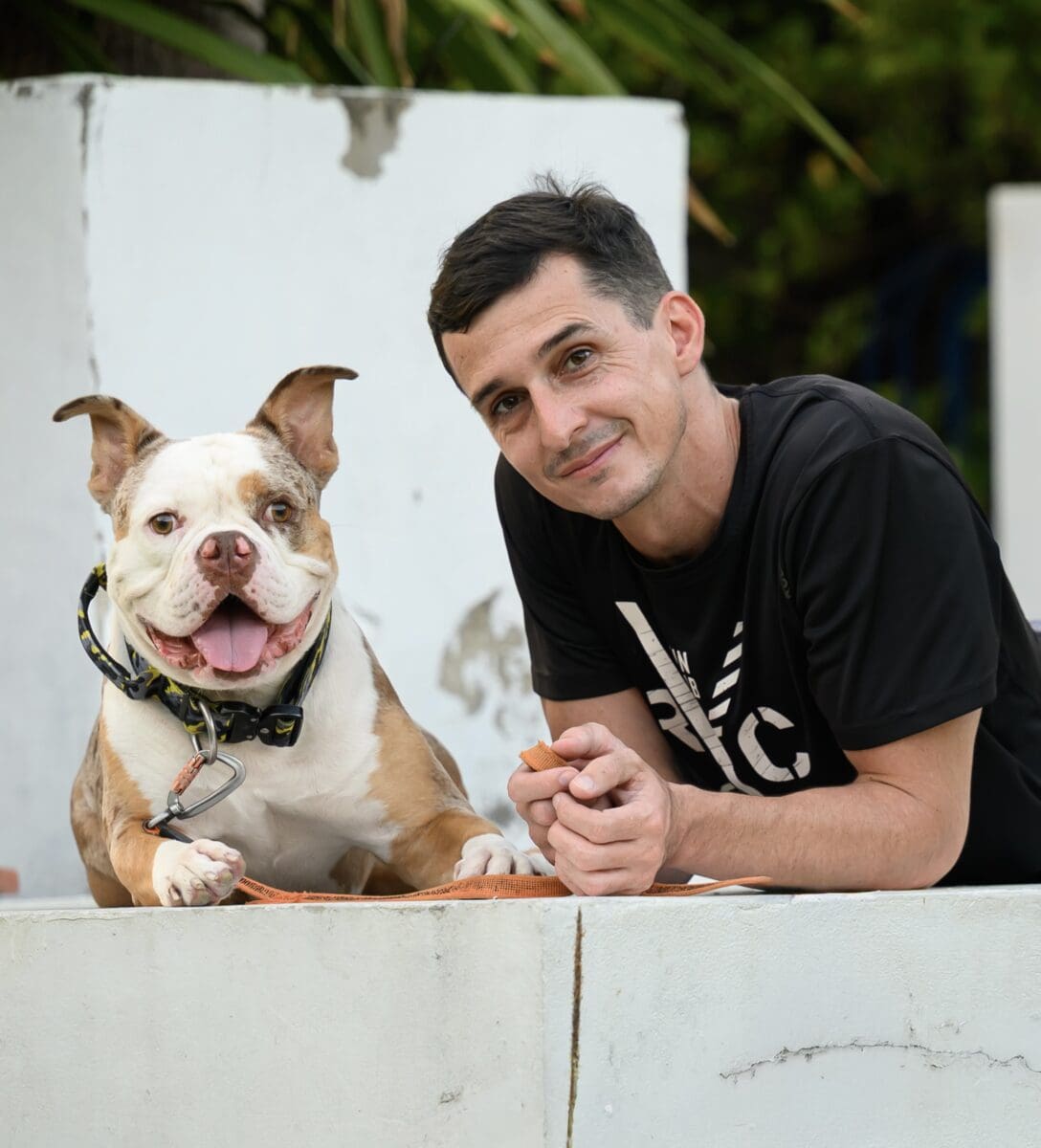
Dylan, a Certified Trainer & Nutritionist, works with dogs and their families where they live. He starts in the home, then moves sessions out into the streets, sois, and lobbies a dog actually has to cope with — building the skills and confidence for owner and dog to move through dog-friendly Bangkok together. His approach to dog training in Bangkok, as he puts it: look at what the dog in front of him needs, then work with the family on understanding it and the skills to manage it day to day.
From corporate job to dog training in Bangkok
Dylan’s dad got him into dogs as a kid, but the real turn came later, once he had dogs of his own — he started studying more and learning from better trainers just to become a better owner. That led to volunteering with bull breed owners working through challenges at home, until, as he puts it, he couldn’t justify the corporate job anymore. Dogs were all he could think about, families needed help, and there were too many heavy-handed trainers around that he wouldn’t have trusted with his own dogs. He wanted to offer the dog community something else.
A guard, a hotel dog, and a turning point
One case has stuck with him. Charcoal, a Thai dog living at her family’s hotel, had a history of run-ins with the property’s security guard and had learned to lunge and fixate whenever he was near. Weeks into training, they brought him back — walking past, handing objects to Charcoal’s mom, all previous triggers. No lunging, no outburst. Instead, Charcoal held eye contact and checked in with her owner before deciding she didn’t need to react. “It’s rare that we see it that clearly and suddenly,” Dylan says. “Usually it’s gradual over time.”
What makes Bangkok different
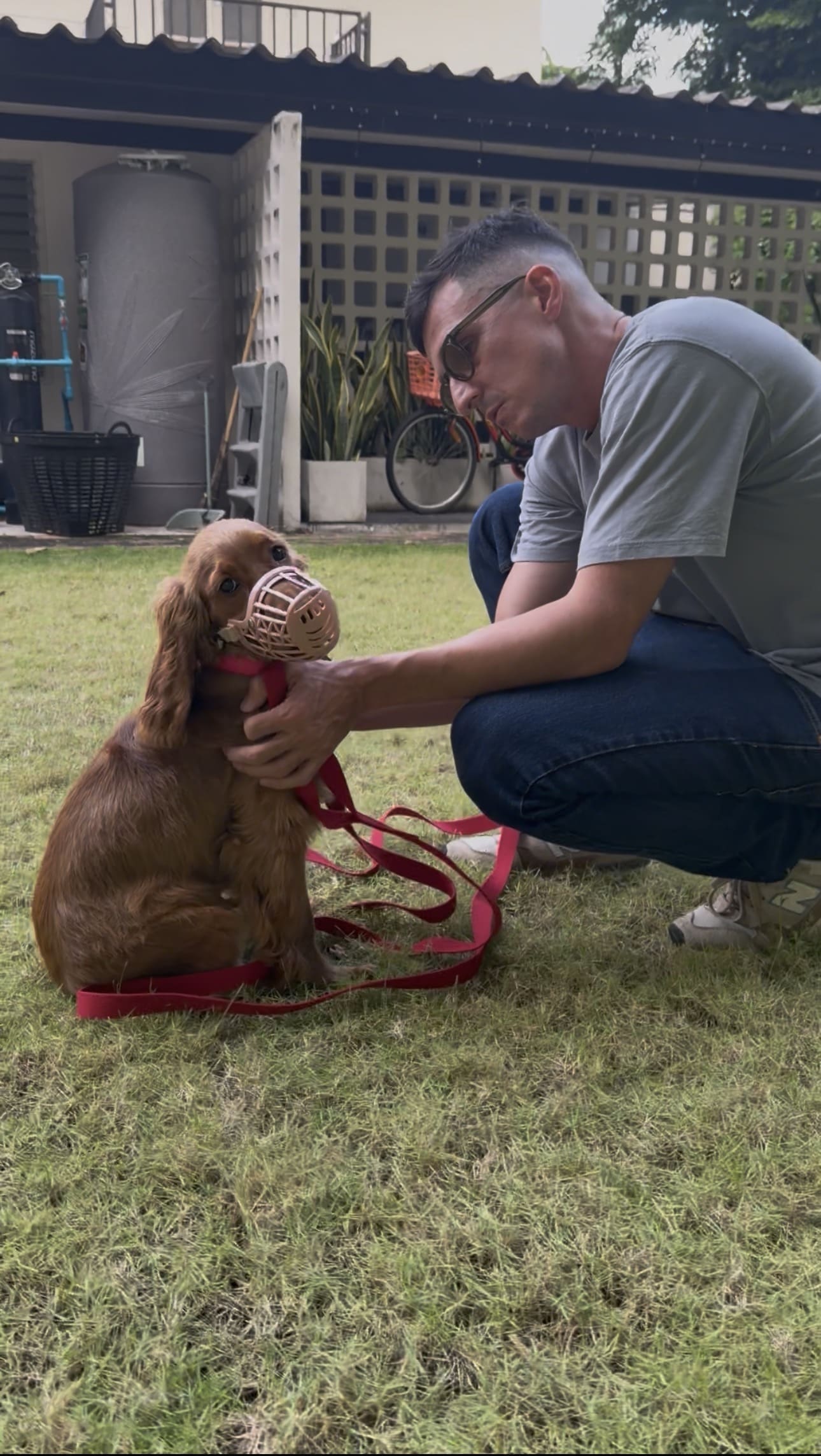
Ask Dylan what sets dog training in Bangkok apart and the list comes fast: heat that limits exercise, leaving dogs with pent-up energy that fuels anxious or reactive behavior; few quiet green spaces for a dog to properly decompress; condo lifts and lobbies that become bottlenecks for reactivity. Add street dogs, street cats, motorcycles cutting through quiet sois, and food scraps underfoot, and a short walk can carry more sensory pressure than owners realize — one more reason dog-friendly Bangkok still takes real planning, not just good intentions.
The leash-greeting mistake
One habit Dylan sees constantly: on-leash, face-to-face introductions, sprung on a dog without asking first. His fix — check with the other owner, then walk the same direction at a distance apart, letting both dogs settle before a casual sniff. It takes the pressure out of the straight-line greeting and lowers the odds of triggering reactivity.
Start with the basics
“If we’re not achieving baseline health and needs, we can’t ever get baseline healthy behavior.”
Before adding a new drill, Dylan asks owners to look at the fundamentals first — food, movement, breed-appropriate outlets, and sleep. Get those right, he says, and most of what looks like a training problem resolves on its own.
Training is a way of living
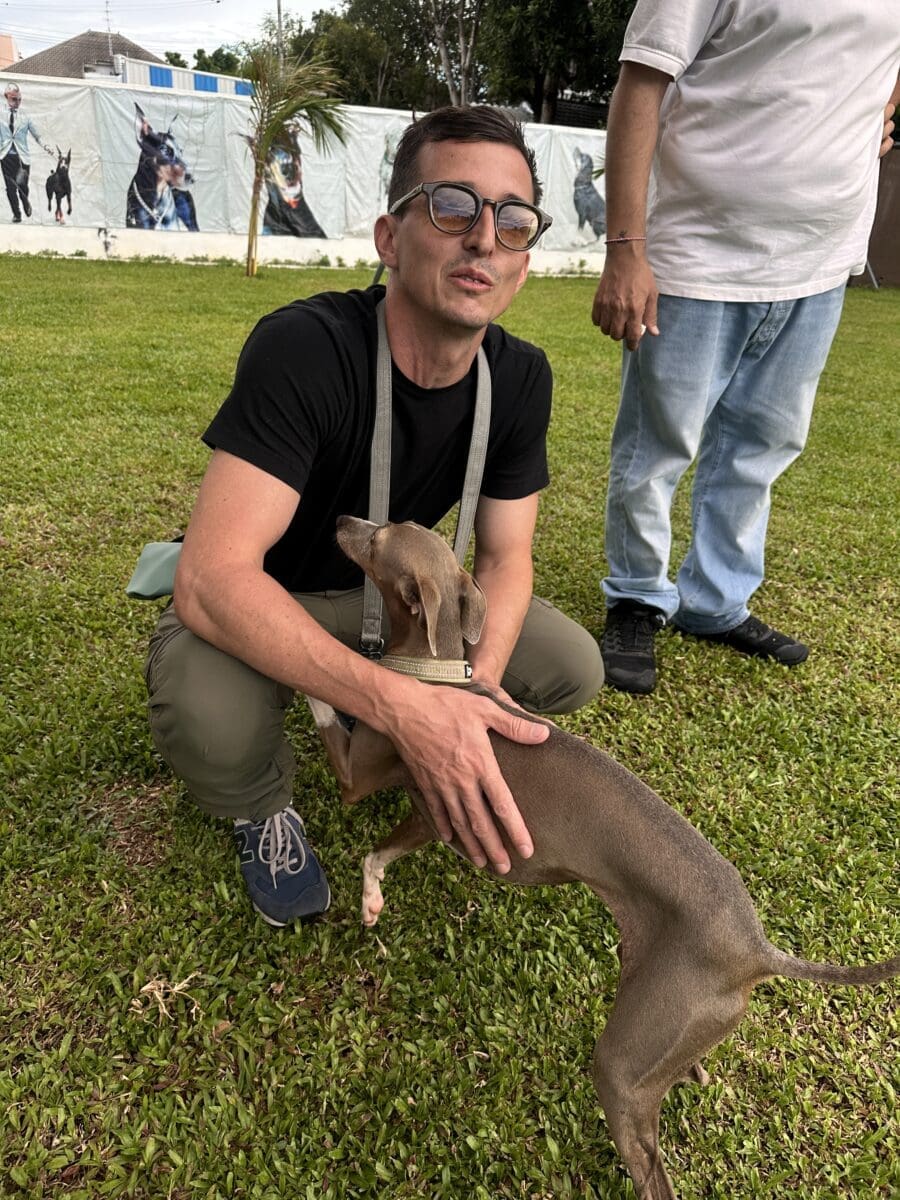
Dylan owns two bull breeds himself, and he’s the first to say they’re a work in progress — the same fears, dislikes, and pushed-luck moments any dog has. Being a trainer doesn’t exempt his own dogs from any of it. Dogs are sentient, ever-changing beings, he says, and training is less a fix than an ongoing way of understanding them, before habits get the chance to set.
Dog Trainer Talk
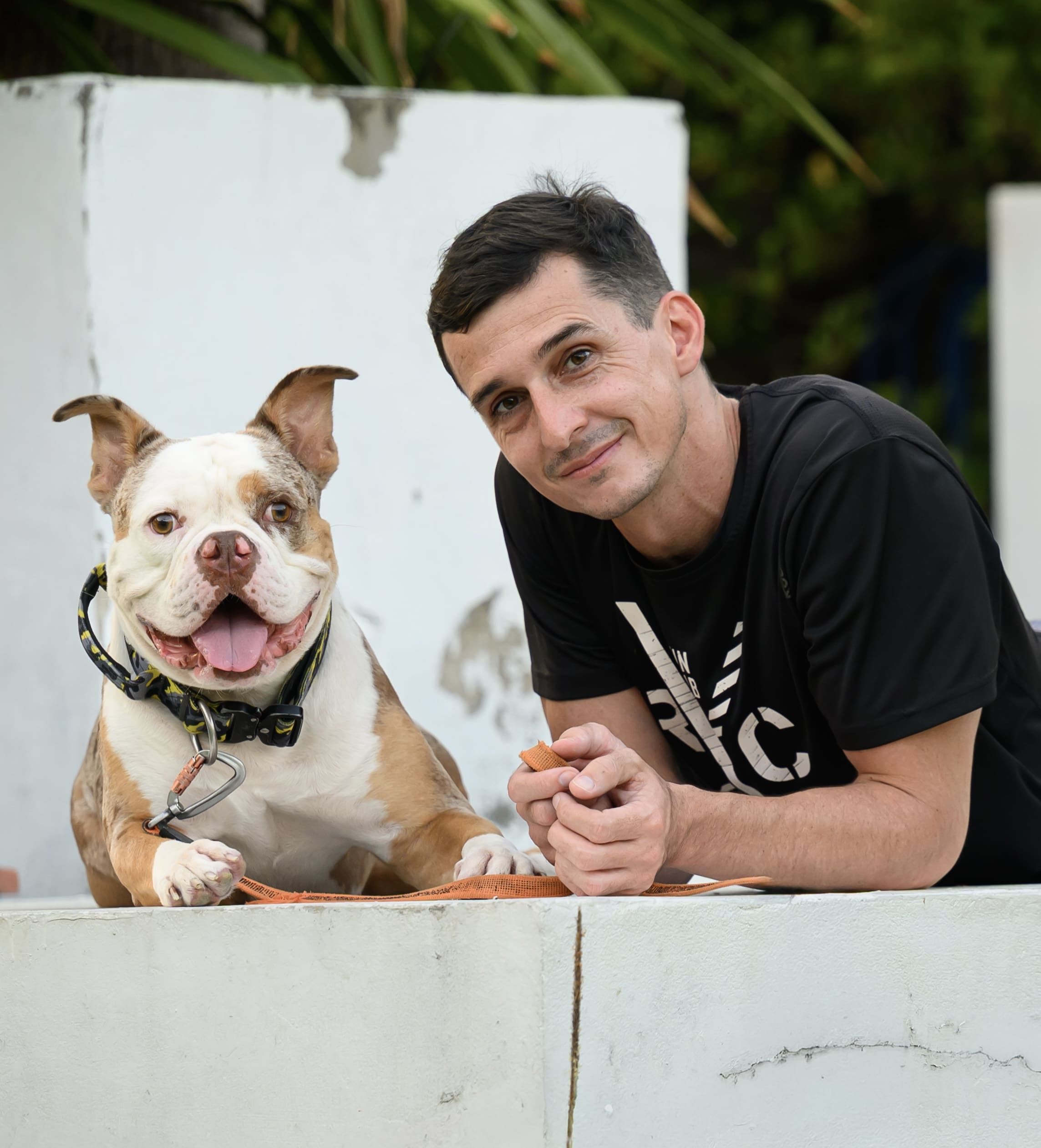
A Pup Cities series putting real questions to Bangkok’s dog trainers — practical, city-specific answers to help owners meet their dog’s needs, one conversation at a time.


